
Exercise 4.1 - Chapter 4 - Trigonometry - 11th Business Maths Guide Samacheer Kalvi Solutions
Updated On 26-08-2025 By Lithanya
You can Download the Exercise 4.1 - Chapter 4 - Trigonometry - 11th Business Maths Guide Samacheer Kalvi Solutions with expert answers for all chapters. Perfect for Tamil & English Medium students to revise the syllabus and score more marks in board exams. Download and share it with your friends
Share this to Friend on WhatsApp
Chapter 4 - Trigonometry - 11th Business Maths Guide Samacheer Kalvi Solutions - Text Book Back Questions and Answers
Text Book Back Questions and Answers
Question 1.
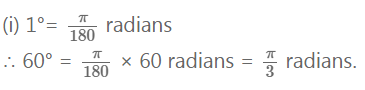
Convert the following degree measure into radian measure
(i) 60°
(ii) 150°
(iii) 240°
(iv) -320°
Solutions:



Question 2.
Find the degree measure corresponding to the following radian measure.
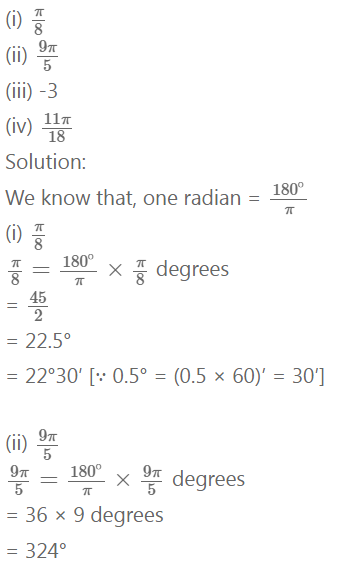
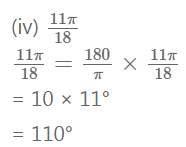
(iii) -3

= -171.81°
= -171°48′ (∵ 0.8° = (0.8 × 60)’ = 48′)
Question 3.
Determine the quadrants in which the following degree lie.
(i) 380°
(ii) -140°
(iii) 1195°
Solution:
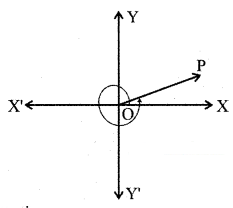
(i) 380° = 360°+ 20°
This is of the form 360° + θ
∴ After one completion of the round, the angle is 20°, 380° lies in the I quadrant.
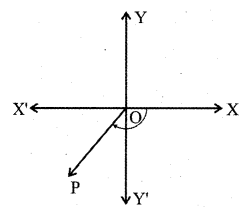
(ii) -140° = -90° + (-50°)
The angle is negative it moves in the anti-clockwise direction.
-140° lies in the III quadrants.
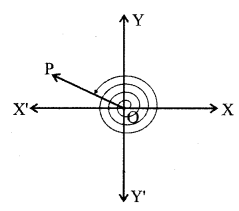
(iii) 1195° = (3 × 360°) + 90° + 25°
∴ After three completion round, the angle will lie in the II quadrant.
1195° lies in the II quadrant.
Question 4.
Find the values of each of the following trigonometric ratios.
(i) sin 300°
(ii) cos(-210°)
(iii) sec 390°
(iv) tan(-855°)
(v) cosec 1125°
Solution:
(i) sin 300° = sin(360° – 60°)
[For 360° – 60°. No change in T-ratio. 300° lies in 4th quadrant ‘sin’ is negative]
= -sin 60°

(ii) cos(-210°) = cos 210° (∵ cos(-θ) = cos θ)
[∵ 180 + 30°. No change in T-ratio. 210° lies 3rd quadrant ‘cos’ is negative]
= cos(180° + 30°)
= -cos 30°

(iii) sec 390° = sec(360° + 30°)
= sec 30°
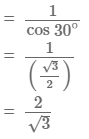
(iv) tan(-855°) = -tan 855° (∵ tan(-θ) = – tan θ)
[∵ Multiplies of 360° are dropped out. For 180° – 45°. No change in T-ratio. 180° – 45° lies in 2nd quadrant ‘tan’ is negative]
= -tan(2 × 360° + 135°)
= -tan 135°
= -tan(180° – 45°)
= -(-tan 45°)
= -(-1)
= 1
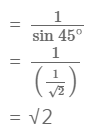
(v) cosec 1125° = cosec(3 × 360°+ 45°)
= cosec 45°
Question 5.
Prove that:
(i) tan(-225°) cot(-405°) – tan(-765°) cot(675°) = 0.

Solution:
(i) tan(-225°) = -(tan 225°)
= -(tan(180° + 45°))
= – tan 45°
= – 1
cot(-405°) = -(cot 405°)
= – cot(360° + 45°) [∵ For 360° + 45° no change in T-ratio.]
= -cot 45°
= -1
tan(-765°) = -tan 765°
= -tan(2 × 360° + 45°)
= -tan 45°
= -1
cot 675° = cot (360°+ 315°)
= cot 315°
= cot(360° – 45°)
= -cot 45°
= -1
LHS = tan(-225°) cot(-405°) – tan(-765°) cot(675°)
= (-1) (-1) – (-1) (-1)
= 1 – 1
= 0
= RHS.
Hence proved.
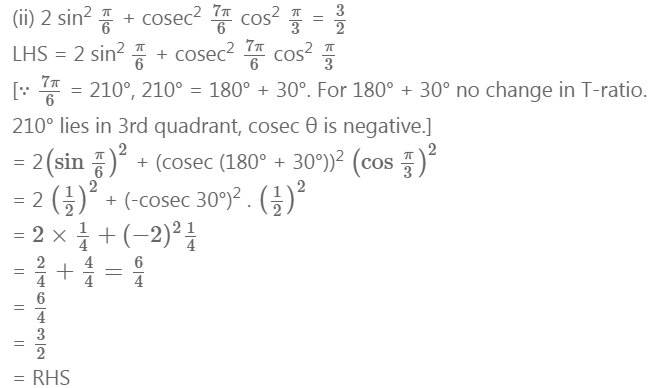
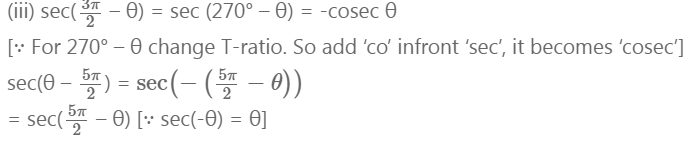
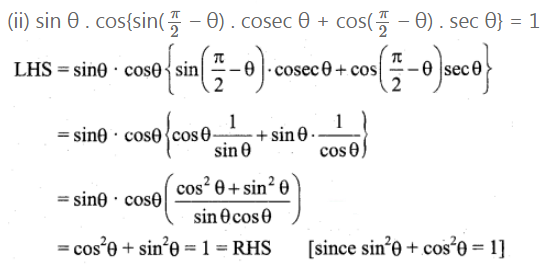
= sec(450° – θ)
= sec (360° + (90° – θ))
= sec (90° – θ)
= cosec θ
[∵ For 90° – θ change in T-ratio. So add ‘co’ in front of ‘sec’ it becomes ‘cosec’]

[∵ For 90° + θ, change in T-ratio. So add ‘co’ in front of ‘tan’ it becomes ‘cot’]
= tan (360° + (90° + θ))
= tan (90° + θ)
= -cot θ
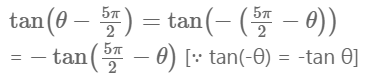
= -tan(450° – θ)
= -tan(360° + (90° – θ))
= -tan(90° – θ)
= -cot θ

= -cosec θ (cosec θ) + (-cot θ) (-cot θ)
= -cosec2 θ + cot2 θ
= -(1 + cot2 θ) + cot2 θ [∵ 1 + cot2 θ = cosec2 θ]
= -1
= RHS
Question 6.
If A, B, C, D are angles of a cyclic quadrilateral, prove that: cos A + cos B + cos C + cos D = 0.
Solution:
Note: If the vertices of a quadrilateral lie on the circle then the quadrilateral is called a cyclic quadrilateral.
In a cyclic quadrilateral sum of opposite angles are 180°.
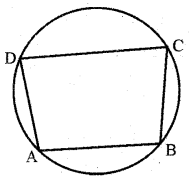
Since A, B, C, D are angles of cyclic quadrilateral
A + C = 180° and B + D = 180°
LHS = cos A + cos B + cos C + cos D
= cos A + cos B + cos(180° – A) + cos(180° – B)
= cos A + cos B – cos A – cos B
= 0
= RHS
Question 7.
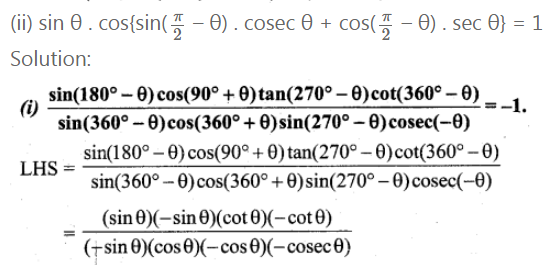
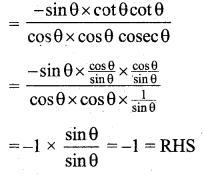
Prove that

Question 8.
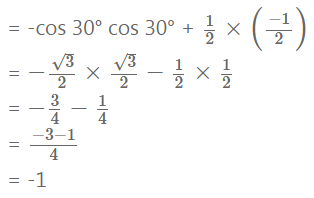
Prove that: cos 510° cos 330° + sin 390° cos 120° = -1.
Solution:
LHS = cos 510° cos 330° + sin 390° cos 120°
= cos(360° + 150°) cos(360° – 30°) + sin(360° + 30°) × cos(180° – 60°)
= cos 150° cos 30° + sin 30° (-cos 60°)
= cos(180° – 30°) cos 30° + sin 30° cos 60°
Question 9.
Prove that:
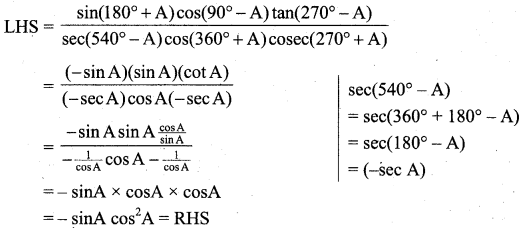
(i) tan(π + x) cot(x – π) – cos(2π – x) cos(2π + x) = sin2 x.

Solution:
(i) tan(π + x) cot(x – π) – cos(2π – x) cos(2π + x) = (tan x) (-cot(π – x) – cos x cos x
[∵ cot(x – π) = cot(-(π – x)) = -cot(π – x) = cot x]
= tan x cot x – cos2 x
= 1 – cos2 x
= sin2 x [∵ sin2 x + cos2 x = 1 ⇒ sin2 x = (1 – cos2 x)]

Question 10.
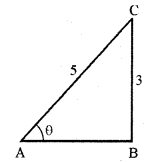
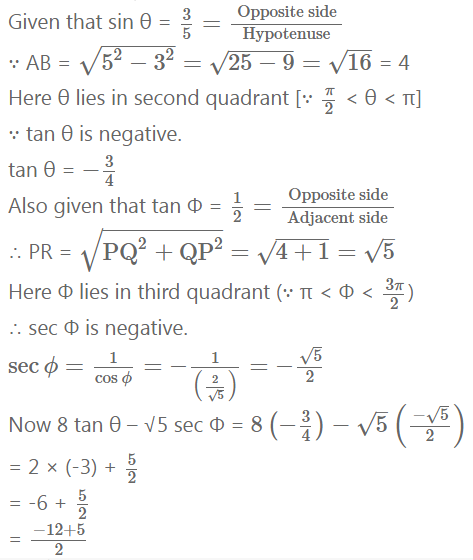
If sin θ = 3/5, tan φ = 1/2 and π2 < θ < π < φ < 3π/2, then find the value of 8 tan θ – √5 sec φ.
Solution: