

Exercise 7.2 - Chapter 7 - Financial Mathematics - 11th Business Maths Guide Samacheer Kalvi Solutions
Updated On 26-08-2025 By Lithanya
You can Download the Exercise 7.2 - Chapter 7 - Financial Mathematics - 11th Business Maths Guide Samacheer Kalvi Solutions with expert answers for all chapters. Perfect for Tamil & English Medium students to revise the syllabus and score more marks in board exams. Download and share it with your friends
Share this to Friend on WhatsApp
Exercise 7.2
Text Book Back Questions and Answers
Question 1.
Find the market value of 62 shares available at 132 having the par value of 100.
Solution:
Market value = Number of shares × Market value of a share
= 132 × 62
= 8,184
Question 2.
How much will be required to buy 125 of 25 shares at a discount of 7.
Solution:
Face value of a share = 25
Market value of a share = 25 – 7 = 18
Amount of money required to buy 125 shares = Number of shares × Market value of a share
= 125 × 18
= 2,250
Question 3.
If the dividend received from 9% of 20 shares is 1,620, find the number of shares.
Solution:
Income = Number of shares × Face value of a share × Rate of dividend
1620 = Number of shares 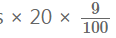

Question 4.
Mohan invested 29,040 in 15% of 100 shares of a company quoted at a premium of 20%. Calculate
(i) the number of shares bought by Mohan
(ii) his annual income from shares
(iii) the percentage return on his investment
Solution:
Investment = 29,040
Rate of dividend = 15%
Number of shares = 100
Premium = 20%
(i) Number of shares
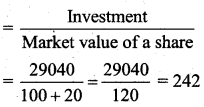
(ii) Annual income from shares = (Number of shares) × (Face value of a share) × (Rate of dividend)
= 242 × 100 × 15100
= 3630
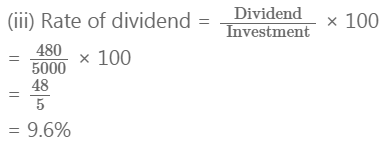
(iii) The percentage return on his investment
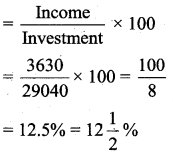
Question 5.
A man buys 400 of 10 shares at a premium of 2.50 on each share. If the rate of dividend is 12% find
(i) his investment
(ii) annual dividend received by him
(iii) rate of interest received by him on his money
Solution:
(i) Given Number of shares = 400
Face value of a share 10 market values of a share = 10 + 2.50 = 12.50
Investment = Number of shares × Market value of a share = 400 × 12.50 = 5000
(ii) Annual dividend = Number of shares × Face value × Rate of dividend
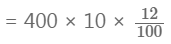
=480
Question 6.
Sundar bought 4,500 of 10 shares, paying 2% per annum. He sold them when the price rose to 23 and invested the proceeds in 25 shares paying 10% per annum at 18. Find the change in his income.
Solution:
Number of shares 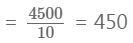
Income from 2% stock = Number of shares × face value × Rate of dividend
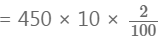
= 575
Income, from 10% stock = No of shares × face value × Rate of dividend
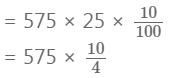
= 1437.5
= 1437.50
Charge in his income = 1437.50 – 90 = 1347.50
Question 7.
A man invests 13,500 partly in 6% of 100 shares at 140 and partly in 5% of 100 shares at 125. If his total income is 560, how much has he invested in each?
Solution:
Let the amount invested in 6% of 100 shares at 140 be x.
Then the amount invested in 5% of 100 shares at 125 is 13500 – x.
Income from 6% shares = Number of shares × Face value of a share × Rate of dividend
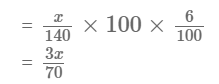
Income from 5% shares = Number of shares × Face value of a share × Rate of dividend
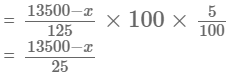
Given that the total income = 560
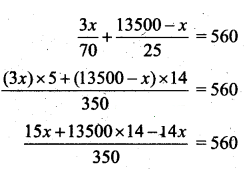
x + 13500 × 14 = 560 × 350
x = 196000 – 189000 = 7000
Amount invested at 6% stock = 7,000
Amount invested at 5% stock = 13500 – 7000 = 6500
Question 8.
Babu sold some 100 Shares at a 10% discount and invested his sales proceeds in 15% of 50 shares at 33. Had he sold his shares at a 10% premium instead of a 10% discount, he would have earned 450 more. Find the number of shares sold by him.
Solution:
Let the number of shares sold by Babu be x.
The face value of a share is 100.
He sold a 10% discount; the selling price of one share 90.
The selling price of x shares = 90x
He bought a share of face value 50 and the number of shares 33.
∴ Number of shares bought for the amount
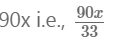
∴ Face value of 50 shares = Cost of one share × Number of share
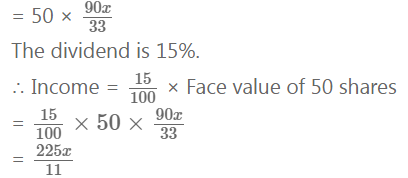
Suppose he sold his shares at 10% premium instead of 10% discount, the market value of one share is 110.
Selling price of x shares 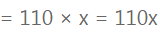
Number of shares bought for 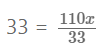

Change Income = 450
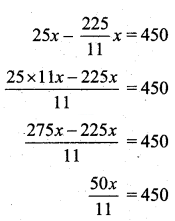

Question 9
Which is better investment? 7% of 100 shares at 120 (or) 8% of 100 shares at 135.
Solution:
Let the investment in each case be (120 × 135)
Case (i): Income from 7% of 100 shares at 120 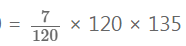
= 7 × 135
= 945
Case (ii): Income from 8% of 100 shares at 135 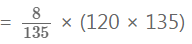
= 8 × 120
= 960
∴ 8% of 100 shares at 135 is better investment.
Question 10.
Which is better investment? 20% stock at 140 (or) 10% stock at 70.
Solution:
Let the investment in case be 140 × 70
Income from 20% stock at 140 is 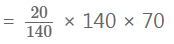
= 20 × 70
= 1400
Income from 10% stock at 70 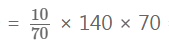 = 1400
For the same investtnent both stocks fetch the same income. Therefore they are equivalent shares.